Define You Could Say That Again
say
(sā)v. said (sĕd), say·ing, says (sĕz)
v. tr.
1. To utter aloud; pronounce: The children said, "Good morning."
2. To express in words: Say what's on your mind.
3.
a. To state as an opinion or judgment; declare: I say let'southward swallow out.
b. To state as a conclusion of fact: Information technology'south hard to say who is right in this affair.
c. To report or maintain; allege: It is said he is a fraud.
four. To repeat or recite: said grace.
5.
a. To indicate; show: The clock says half by ii.
b. To requite nonverbal expression to; signify or embody: It was an act that said "devotion."
6. To suppose; assume: Permit'due south say that you're right.
5. intr.
To make a argument or express an opinion or judgment: The story must be true because the teacher said so.
northward.
1. A turn or hazard to speak: Having had my say, I sat down.
2. The right or ability to influence or brand a decision: Citizens have a say in the councils of government. All I want is some say in the thing.
3. Primitive Something said; a statement.
adv.
1. Approximately: There were, say, 500 people present.
2. For instance: a woodwind, say an oboe.
interj.
Used to express surprise or entreatment for someone's attention.
I say
ane. Used preceding an utterance to call attention to information technology: I say, do you have the time?
ii. Used every bit an exclamation of surprise, delight, or dismay.
that is to say
In other words.
to say nothing of
And at that place is no demand to mention. Used to allude to things that make full out an idea or statement: The thou is a mess, to say zilch of the house.
you can say that again Slang
Used to express strong agreement with what has but been said.
say′er north.
American Heritage® Lexicon of the English Language, Fifth Edition. Copyright © 2016 past Houghton Mifflin Harcourt Publishing Company. Published by Houghton Mifflin Harcourt Publishing Company. All rights reserved.
say
(seɪ)vb (mainly tr) , says (sɛz) , proverb or said
1. to speak, pronounce, or utter
two. (likewise intr) to express (an idea) in words; tell: nosotros asked his opinion but he refused to say.
3. (also intr; may take a clause every bit object) to country (an opinion, fact, etc) positively; declare; affirm
4. to recite: to say grace.
five. (may take a clause equally object) to report or allege: they say we shall take rain today.
6. (may accept a clause as object) to take as an supposition; suppose: let us say that he is lying.
seven. (may take a clause equally object) to convey by means of artistic expression: the creative person in this painting is saying that nosotros should expect for hope.
8. to make a case for: there is much to be said for either course of activeness.
9. (normally passive) Irish gaelic to persuade or coax (someone) to do something: If I hadn't been said past her, I wouldn't be in this fix.
x. become without maxim to exist so obvious as to need no explanation
11. I say! chiefly informal Brit an exclamation of surprise
12. not to say even; and indeed
13. that is to say in other words; more explicitly
14. to say naught of as well equally; even disregarding: he was warmly dressed in a shirt and heavy jumper, to say cypher of a thick overcoat.
15. to say the to the lowest degree without the slightest exaggeration; at the very least
adv
16. approximately: there were, say, twenty people present.
17. for example: choose a number, say, 4.
n
18. the correct or hazard to speak: allow him take his say.
19. authorisation, esp to influence a decision: he has a lot of say in the visitor'southward policy.
20. a statement of opinion: you've had your say, at present let me accept mine.
interj
informal Us and Canadian an exclamation to attract attention or express surprise, etc
[Erstwhile English secgan; related to Old Norse segja, Old Saxon seggian, One-time High German language sagēn]
ˈsayer n
say
(seɪ)n
(Textiles) primitive a type of fine woollen fabric
[C13: from Onetime French saie, from Latin saga, plural of sagum a type of woollen cloak]
Collins English Dictionary – Complete and Unabridged, 12th Edition 2014 © HarperCollins Publishers 1991, 1994, 1998, 2000, 2003, 2006, 2007, 2009, 2011, 2014
say
(seɪ) v. said, say•ing,
adv., north., interj. v.t.
1. to utter or pronounce; speak: to say a word.
two. to limited in words; state; declare: Say what you recollect.
3. to state as an stance or judgment: I say we should expect here.
4. to recite or repeat.
5. to report or allege; maintain.
six. to express (a message, viewpoint, etc.), as through a literary or other artistic medium.
7. to indicate or evidence: What does your scout say?
v.i.8. to speak; declare; express an opinion, idea, etc.
adv.9. approximately; virtually: It'south, say, xiv feet long.
x. for example.
n.11. what a person says or has to say.
12. the right or opportunity to state an opinion or exercise influence: to have one'south say in a decision.
xiii. a turn to say something.
interj.xiv. (used to limited surprise, get attention, etc.)
Idioms:go without proverb, to be completely self-evident.
[before 900; Middle English seyen, seggen, Old English secgan; c. Dutch zeggen, German sagen, Erstwhile Norse segja; alike to saw3]
say′er, n.
Random Firm Kernerman Webster's Higher Dictionary, © 2010 1000 Dictionaries Ltd. Copyright 2005, 1997, 1991 by Random House, Inc. All rights reserved.
say
1. 'say'
When you say something, yous use your vocalisation to produce words. The by tense and -ed participle of say is said /sed/.
You employ say when you are quoting directly the words that someone has spoken.
'I feel so happy,' she said.
'The trouble,' he said, 'is that Mr Sanchez is very upset.'
In writing, you lot can use many other verbs instead of say when y'all are quoting someone's words.
In spoken English language, you usually employ say.
He said to me, 'What shall nosotros do?'
Be Careful!
In speech communication, y'all mention the person and say earlier quoting their words. Don't say, for example, ''What shall we do?' he said to me' in spoken English.
You can utilize information technology after said to refer to the words spoken by someone.
You could have said information technology a bit more politely.
I merely said it for something to say.
If you lot are referring in a general way to what someone has expressed, rather than their actual words, use so, not 'it'. For instance, say 'I disagree with him and I said so'. Don't say 'I disagree with him and I said it'.
If you wanted more than to eat, why didn't you say so earlier?
I know she liked it because she said so.
Yous can study what someone has said without quoting them directly using say and a that-clause.
She said she hadn't slept very well.
They said that smoking wasn't permitted anywhere in the building.
Be Careful!
Don't use 'say' with an indirect object. For example, don't say 'She said me that Mr Rai had left.' Say 'She said that Mr Rai had left' or 'She told me that Mr Rai had left.'
2. 'tell'
If you are mentioning the hearer equally well as the speaker, you usually use tell, rather than 'say'. The past tense and -ed participle of tell is told. For instance, instead of saying 'I said to him that his mother had arrived', say 'I told him that his mother had arrived'.
'I take no intention of resigning,' he told the press.
She told me to sit down.
Yous say that someone tells a story, lie, or joke.
You're telling lies now.
Dad told jokes and stories.
Be Careful!
Don't say that someone 'says' a story, lie, or joke. Don't say, for example 'Yous're saying lies at present'.
iii. 'ask'
Don't say that someone 'says' a question. Say that they enquire a question.
Luka asked me a lot of questions virtually my job.
I asked what fourth dimension information technology was.
4. 'give'
Don't say that someone 'says' an social club or instruction. Say that they give an order or teaching.
Who gave the order for the men to shoot?
She had given clear instructions about what to do while she was away.
5. 'call'
If y'all want to say that someone describes someone else in a particular manner, yous tin can utilize say followed by a that-clause. For example, you can say 'He said that I was a liar'. You can too say that someone calls someone something. For example, you lot can say 'He called me a liar'.
She called me lazy and selfish.
6. 'talk about'
Don't apply say to mention what someone is discussing. Don't say, for case, 'He said well-nigh his concern'. Say 'He talked about his business concern'.
Lucy talked about her childhood and her family.
speak
– say – tell1. 'speak'
When you speak, you lot use your voice to produce words. The past tense of speak is spoke. The -ed participle is spoken.
They spoke very enthusiastically about their trip.
I've spoken to Raja and he agrees with me.
two. 'say'
Don't use 'speak' to report what someone says. Don't say, for case, 'He spoke that the doctor had arrived'. Say 'He said that the doctor had arrived'.
I said that I would like to teach English.
He said it was an accident.
iii. 'tell'
If you mention the person who is being spoken to every bit well as what was said, employ tell.
He told me that he was a farmer.
I told her what the doctor had said.
Collins COBUILD English Usage © HarperCollins Publishers 1992, 2004, 2011, 2012
say
Past participle: said
Gerund: proverb
| Imperative |
|---|
| say |
| say |
Collins English Verb Tables © HarperCollins Publishers 2011
Thesaurus Antonyms Related Words Synonyms Legend:
| Noun | 1. | say - the gamble to speak; "let him have his say" gamble, opportunity - a possibility due to a favorable combination of circumstances; "the holiday gave u.s. the opportunity to visit Washington"; "at present is your gamble" |
| Verb | 1. | say - express in words; "He said that he wanted to marry her"; "tell me what is bothering y'all"; "land your opinion"; "country your proper name" state, tell present, lay out, represent - bring frontward and present to the mind; "We presented the arguments to him"; "Nosotros cannot represent this knowledge to our formal reason" misstate - state something incorrectly; "Yous misstated my position" reply, reply, reply - react verbally; "She didn't want to answer"; "answer the question"; "Nosotros answered that we would accept the invitation" preface, premise, precede, introduce - furnish with a preface or introduction; "She e'er precedes her lectures with a joke"; "He prefaced his lecture with a critical remark about the institution" give tongue to, utter, express, verbalise, verbalize - articulate; either verbally or with a cry, shout, or dissonance; "She expressed her anger"; "He uttered a curse" announce, declare - announce publicly or officially; "The President declared war" enunciate, vocalise, vocalize, clear - express or state clearly say - state as one'due south opinion or judgement; declare; "I say let'due south forget this whole business organisation" get out - express with difficulty; "I managed to go out a few words" declare - state emphatically and authoritatively; "He declared that he needed more coin to bear out the task he was charged with" declare - brand a declaration (of dutiable appurtenances) to a customs official; "Practise you have anything to declare?" note, remark, mention, observe - make mention of; "She observed that his presentation took up too much time"; "They noted that information technology was a fine twenty-four hours to get sailing" add, append, supply - land or say further; "`It doesn't affair,' he supplied" explain - define; "The committee explained their plan for fund-raising to the Dean" give - convey or reveal data; "Requite ane's name" sum, summarise, summarize, sum up - be a summary of; "The abstract summarizes the main ideas in the paper" |
| 2. | 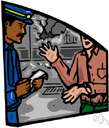 say - report or maintain; "He alleged that he was the victim of a crime"; "He said it was as well late to intervene in the war"; "The registrar says that I owe the school coin" say - report or maintain; "He alleged that he was the victim of a crime"; "He said it was as well late to intervene in the war"; "The registrar says that I owe the school coin"allege, aver plead - make an accusation in an activeness or other legal proceeding, particularly answer the previous pleading of the other party past denying facts therein stated or past alleging new facts affirm, asseverate, maintain - land categorically | |
| 3. | say - express a supposition; "Let us say that he did non tell the truth"; "Allow'south say y'all had a lot of money--what would you lot exercise?" suppose speculate - hash out conjecturally, or review in an idle or casual way and with an element of incertitude or without sufficient reason to reach a conclusion; "We were speculating whether the President had to resign after the scandal" | |
| 4. | say - have or contain a certain wording or class; "The passage reads as follows"; "What does the law say?" read read - translate something that is written or printed; "read the advertising"; "Accept you read Salman Rushdie?" feature, have - accept every bit a feature; "This eating place features the most famous chefs in France" | |
| 5. | say - give instructions to or directly somebody to exercise something with dominance; "I said to him to go home"; "She ordered him to do the shopping"; "The mother told the child to get dressed" society, enjoin, tell direct - command with authorisation; "He directed the children to practice their homework" instruct - give instructions or directions for some task; "She instructed the students to work on their pronunciation" command, require - make someone do something request - enquire (a person) to do something; "She asked him to be hither at noon"; "I requested that she blazon the entire manuscript" send for, call - guild, asking, or control to come; "She was called into the manager's office"; "Phone call the police!" warn - inquire to go abroad; "The old man warned the children off his belongings" | |
| 6. | say - speak, pronounce, or utter in a certain way; "She pronounces French words in a funny fashion"; "I cannot say `null wire'"; "Can the child audio out this complicated give-and-take?" enounce, enunciate, pronounce, audio out, articulate twang - pronounce with a nasal twang devoice - utter with tense vocal chords raise - pronounce (vowels) by bringing the tongue closer to the roof of the mouth; "raise your `o'" lilt - articulate in a very careful and rhythmic way palatalise, palatalize - pronounce a consonant with the tongue against the palate nasalise, nasalize - pronounce with a lowered velum; "She nasalizes all her vowels" nasalise, nasalize - speak nasally or through the nose; "In this part of the state, people tend to nasalize" mispronounce, misspeak - pronounce a word incorrectly; "She mispronounces many Latinate words" aspirate - pronounce with aspiration; of stop sounds vocalize, voice, vocalise, audio - utter with vibrating vocal chords retroflex - articulate (a consonant) with the tongue curled back against the palate; "Indian accents tin can be characterized past the fact that speakers retroflex their consonants" subvocalise, subvocalize - articulate without making aural sounds; "she was reading to herself and merely subvocalized" syllabise, syllabize - utter with distinct articulation of each syllable; "The poet syllabized the verses he read" drawl - lengthen and tiresome downward or draw out; "drawl ane'south vowels" labialise, labialize, round - pronounce with rounded lips lisp - speak with a lisp accent, accentuate, stress - put stress on; utter with an accent; "In Farsi, you emphasis the last syllable of each give-and-take" vowelise, vowelize, vocalise, vocalize - pronounce as a vowel; "betwixt two consonants, this liquid is vowelized" click - produce a click; "Xhosa speakers click" trill - pronounce with a trill, of the phoneme `r'; "Some speakers trill their r's" sibilate - pronounce with an initial sibilant flap - pronounce with a flap, of alveolar sounds explode - cause to outburst as a consequence of air pressure; of end consonants similar /p/, /t/, and /k/ roll - pronounce with a roll, of the phoneme /r/; "She rolls her r'southward" | |
| 7. | say - communicate or express nonverbally; "What does this painting say?"; "Did his confront say annihilation well-nigh how he felt?" say - bespeak; "The clock says noon" convey - brand known; pass on, of information; "She conveyed the message to me" | |
| 8. | say - utter aloud; "She said `Hello' to everyone in the office" requite natural language to, utter, limited, verbalise, verbalize - articulate; either verbally or with a cry, shout, or dissonance; "She expressed her anger"; "He uttered a curse" | |
| 9. | say - state as one's opinion or judgement; declare; "I say let'due south forget this whole business" say, state, tell - express in words; "He said that he wanted to marry her"; "tell me what is bothering you"; "land your opinion"; "state your proper noun" | |
| ten. | say - recite or repeat a stock-still text; "Say grace"; "She said her `Hail Mary'" recite - repeat aloud from memory; "she recited a poem"; "The pupil recited his lesson for the day" | |
| 11. | say - point; "The clock says apex" tape, register, read, show - indicate a certain reading; of gauges and instruments; "The thermometer showed thirteen degrees below null"; "The estimate read `empty'" say - communicate or express nonverbally; "What does this painting say?"; "Did his face say anything nigh how he felt?" |
Based on WordNet 3.0, Farlex clipart drove. © 2003-2012 Princeton Academy, Farlex Inc.
say
verb
nine. allege, report, claim, agree, propose, insist, maintain, rumour, assert, uphold, profess, put virtually that He says he did it later the police pressured him.
noun
2. chance to speak, vote, voice, scissure (informal), opportunity to speak, turn to speak Let him have his say.
Collins Thesaurus of the English Linguistic communication – Complete and Entire 2nd Edition. 2002 © HarperCollins Publishers 1995, 2002
say
verb1. To produce or brand (speech sounds):
2. To put into words:
articulate, communicate, convey, declare, express, land, talk, tell, utter, vent, verbalize, vocalize, voice.
Idiom: give tongue to.
3. To put into words positively and with confidence:
affirm, allege, argue, assert, asseverate, aver, avouch, avow, claim, contend, declare, hold, maintain, state.
The right or chance to express an stance or participate in a decision:
The American Heritage® Roget's Thesaurus. Copyright © 2013, 2014 by Houghton Mifflin Harcourt Publishing Company. Published past Houghton Mifflin Harcourt Publishing Visitor. All rights reserved.
Translations
تَقْريبا، حَوالي قَوْل، كَلِمَه، رأْي يُخْبِر، يُعْلِن، يُصَرِّح يُرَدِّد يَعْرِف، يُقَدِّر، يُخَمِّن
declamar dir recitar
říci říct říkat odříkat povědět
sige accept noget at sige
sanoa virkkaa kertoa näyttää
reći recitirati kazati
beleszólás
segja segja til um segja, fara meî
言う 語る おっしゃる 暗唱 書かれている
말하다
galimybė pareikšti nuomonę kitaip tariant neatsisakyčiau pasakyti dėl to pasiaiškinti dėl to
atkārtot noteicošais vārds noteikt pateikt sacīt
povedať príležitosť prehovoriť
reči recimo povedati praviti predstaviti svoje mnenje
säga
พูด
nói
say
[seɪ] (said (vb: pt, pp))
A. VT & VI
3. (in phrases)
when all is said and done → al fin y al cabo, a fin de cuentas
she has zip to say for herself → no tiene conversación, nunca abre la boca
what have you got to say for yourself? → ¿y tú, qué dices?
he never has much to say for himself → habla poco
that doesn't say much for him → eso no es una gran recomendación para él
it says much for his backbone that he stayed → el que permaneciera allí demuestra su valor
it's not for me to say → no me toca a mí decir
to say the to the lowest degree → para no decir más
say what you like virtually her hat, she'south charming → dígase lo que se quiera acerca de su sombrero, es encantadora
that's maxim a lot → y eso es algo
his accommodate says a lot well-nigh him → su traje dice mucho de él
though I say information technology or so myself → aunque soy yo el que lo dice
there'southward no maxim what he'll do → quién sabe lo que hará
I'd rather not say → prefiero no decir (nada)
it'south an original, not to say revolutionary, idea → la idea es original y hasta revolucionaria
to say nothing of the rest → sin hablar de lo demás
would you really say so? → ¿lo crees de veras?
that is to say → o sea, es decir
what do or would y'all say to a walk? → ¿le apetece or se le antoja un paseo?
what would you say to that? → ¿qué contestas a eso?
it goes without saying that → ni que decir tiene que ..., huelga decir que ...
that goes without saying → eso cae de su peso
what he says goes → aquí manda él
4. (impersonal use) it is said that ...; they say that → se dice que ..., dicen que ...
he is said to take been the commencement → dicen que fue el primero
it'southward easier said than done → del dicho al hecho hay gran trecho
at that place's a lot to be said for it/for doing it → hay mucho que decir a su favor/a favor de hacerlo
it must be said that → hay que decir or reconocer que ...
there'due south something to be said for it/for doing it → hay algo que decir a su favor/a favor de hacerlo
in that location'south something to be said on both sides → hay algo que decir en pro y en contra
no sooner said than washed → dicho y hecho
5. (in exclamations) say! (esp US) I'll say! I should say so! you can say that again! → ¡ya lo creo!, ¡exacto!
you don't say! (frequently hum) → ¡no me digas!
enough said! → ¡basta!
I say! (Brit) (calling attending) → ¡oiga!; (in surprise, appreciation) → ¡vaya!, ¡anda!
say no more! → ¡basta!, ¡ni una palabra más!
so you say! → ¡eso es lo que tú dices!
well said! → ¡muy bien dicho!
you've said it! → ¡exacto!, ¡tú lo dijiste!
Collins Spanish Dictionary - Complete and Entire 8th Edition 2005 © William Collins Sons & Co. Ltd. 1971, 1988 © HarperCollins Publishers 1992, 1993, 1996, 1997, 2000, 2003, 2005
say
[ˈseɪ]
vt [said] (pt, pp)
[person] → dire
What did he say? → Qu'est-ce qu'il a dit?
Did y'all hear what she said? → Tu as entendu ce qu'elle a dit?
I'd like to say a few words → J'aimerais dire quelques mots.
to say sth again → répéter qch
Could you say that over again? → Pourriez-vous répéter, s'il vous plaît?
to say yep → dire oui
to say no → dire non
I wouldn't say no (= wouldn't turn down) → je ne dis pas non
to have a lot to say for o.southward. (= talk a lot) → parler beaucoup
He doesn't have much to say for himself → Il ne parle pas beaucoup.
What accept you got to say for yourself? (request for explanation) → Alors, quelle est ton alibi?
(indicating opinion, feelings) to say a lot for sb → être tout à l'honneur de qn
Information technology says a lot for her that she admitted her mistake → C'est tout à son honneur qu'elle ait reconnu son erreur.
to not say much for sb → ne pas être à 50'honneur de qn
That doesn't say much for him → Ce n'est pas à son honneur.
that says it all → cela veut tout dire
there is a lot to exist said for it → cela a beaucoup d'avantages
in that location is something to be said for it → cela a des avantages
(= instruct)
Do as I say! → Fais ce que je te dis!
to say sb has to do sth, to say that sb has to exercise sth
She said I was to requite you this.; She said that I was to give you this → Elle m'a dit de vous remettre ceci.
(in suggestions, suppositions)
Shall we say Tuesday? → Disons mardi?
Come for dinner at, say, viii o'clock → Venez dîner à ... disons 8 heures.
say (that) ... (= imagine that) → mettons que ..., disons que ...
n
to have one's say → dire ce qu'on a à dire
to accept a say → avoir voix au chapitre
Collins English/French Electronic Resource. © HarperCollins Publishers 2005
say
vb: pret, ptp <said>
TRANSITIVE/INTRANSITIVE VERB
→ sagen; you can say what you lot like (most it/me) → Sie können (darüber/über mich) sagen, was Sie wollen; I never idea I'd hear him say that → ich hätte nie gedacht, dass er das sagen würde; that'south not for him to say → es steht ihm nicht zu, sich darüber zu äußern; (= to determine) → das kann er nicht entscheiden; he looks very smart, I'll say that for him → er sieht sehr schick aus, das muss human being ihm lassen; if y'all encounter her, say I haven't inverse my listen → wenn du sie siehst, sag ihr or richte ihr aus, dass ich es mir nicht anders überlegt habe; I'yard not saying it's the best, simply … → ich sage or behaupte ja nicht, dass es das Beste ist, aber …; though I say it myself → wenn ich das mal selbst sagen darf; never let it be said that I didn't try → es soll keiner sagen können or mir soll keiner nachsagen, ich hätte es nicht versucht; well, all I tin say is … → na ja, da kann ich nur sagen …; it tastes, shall we say, interesting → das schmeckt aber, na, sagen wir mal interessant; y'all'd better do it — who says? → tun Sie das lieber — wer sagt das?; well, what can I say? → na ja, was kann man da sagen?; what does information technology mean? — I wouldn't like to say → was bedeutet das? — das kann ich auch nicht sagen; having said that, I must point out … → ich muss allerdings darauf hinweisen …; so saying, he sat down → und mit den Worten setzte er sich
? to say for oneself he didn't have much to say for himself → er sagte or redete nicht viel; (in defence) → er konnte nicht viel (zu seiner Verteidigung) sagen; what take you got to say for yourself? → was haben Sie zu Ihrer Verteidigung zu sagen?
? to say so if you lot don't like it, say so → wenn Sie es nicht mögen, dann sagen Sie es doch; why didn't you lot say so? → warum haben Sie das denn nicht gesagt?; do information technology this way — if you say and so → machen Sie es and then — wenn Sie meinen
giving instructions he said to await here → er hat gesagt, ich soll/wir sollen etc hier warten
= announce → melden; who shall I say? → wen darf ich melden?
= indicate paper, dictionary, clock, horoscope → sagen (inf); (thermometer) → anzeigen, sagen (inf); (police force, church, Bible, calculator) → sagen; it says in the papers that … → in den Zeitungen steht, dass …; what does the paper/this book/your horoscope etc say? → was steht in der Zeitung/diesem Buch/deinem Horoskop etc?; the rules say that … → in den Regeln heißt es, dass …; what does the weather forecast say? → wie ist or lautet (form) → der Wetterbericht?; the weather forecast said that … → es hieß im Wetterbericht, dass …, laut Wetterbericht …; what does your watch say? → wie spät ist es auf Ihrer Uhr?, was sagt Ihre Uhr? (inf); did the news say anything near the strike? → kam in den Nachrichten etwas über den Streik?; they weren't allowed to say anything virtually it in the papers → sie durften in den Zeitungen nichts darüber schreiben
= tell → sagen; it'south hard to say what's wrong → es ist schwer zu sagen, was nicht stimmt; what does that say near his intentions/the main character? → was sagt das über seine Absichten/die Hauptperson aus?; that says a lot nearly his character/state of mind → das lässt tief auf seinen Charakter/Gemütszustand schließen; these figures say a lot almost recent trends → diese Zahlen sind in Bezug auf neuere Tendenzen sehr aufschlussreich; and that's saying a lot → und das will schon etwas heißen; that'south non proverb much → das volition nicht viel heißen; that doesn't say much for him → das spricht nicht für ihn; that says a lot for him → das spricht für ihn; there'south no saying → das weiß keiner; there's no saying what might happen → was (dann) passiert, das kann keiner vorhersagen; there's something/a lot to be said for being based in London → es spricht einiges/viel für ein Zuhause or (for a house) → für einen Sitz in London
= suppose say information technology takes three men to … → angenommen, human braucht drei Leute, um zu …; if it happens on, say, Wednesday? → wenn es am, sagen wir mal Mittwoch, passiert?
in suggestions what would you say to a whisky/game of tennis? → wie wärs mit einem Whisky/mit einer Partie Tennis?; shall we say Tuesday/£50? → sagen wir Dienstag/£ 50?; what did he say to your program? → was chapeau er zu Ihrem Plan gesagt?; I'll offer £500, what do you say to that? → ich biete £ 500, was meinen Sie dazu?; what do you lot say we go now? (inf) → wie wärs or was hieltest du davon, wenn wir jetzt gingen?, was meinst du, sollen wir jetzt gehen?; allow's try again, what d'you say? (inf) → was meinste, versuchen wirs noch mal? (inf); what do you say? → was meinen Sie?; I wouldn't say no to a cup of tea → ich hätte nichts gegen eine Tasse Tee; he never says no to a drinkable → er schlägt einen Beverage nie aus, er sagt nie Nein or nein zu einem Drink
exclamatory well, I must say! → na, ich muss schon sagen!; I say! (dated) → na and then was!; (to concenter attention) → hallo!; I say, thanks awfully, old homo! (dated) → na dann vielen Chilly, altes Haus! (dated); say, what a great idea! (esp US) → Mensch, tolle Idee! (inf); say, buddy! (esp US) → he, Isle of mann! (inf); I should say so! → das möchte ich doch meinen!; yous don't say! (likewise iro) → nein wirklich?, was du nicht sagst!; well said! → (ganz) richtig!; you('ve) said it! → Sie sagen es!; you can say that once more! → das kann man wohl sagen!; say no more! → ich weiß Bescheid!; says you lot! (inf) → das meinst auch nur du! (inf); says who? (inf) → wer sagt das?; and so say all of us → und wir stimmen alle zu
set expressions (it's) easier said than washed → das ist leichter gesagt als getan; no sooner said than done → gesagt, getan; when all is said and done → letzten Endes; they say …, it is said … → es heißt …; he is said to be very rich → er soll sehr reich sein, es heißt, er sei sehr reich; a edifice said to accept been built by … → ein Gebäude, das angeblich von … gebaut wurde or das von … gebaut worden sein soll; information technology goes without saying that … → es versteht sich von selbst, dass …, es ist selbstverständlich, dass …; that goes without saying → das ist selbstverständlich; that is to say → das heißt; (correcting also) → beziehungsweise; that's not to say that … → das soll nicht heißen, dass …; the plan sounded vague, not to say impractical → der Plan klang vage, um nicht zu sagen unpraktisch; to say aught of the racket/costs etc → von dem Lärm/den Kosten etc ganz zu schweigen or mal ganz abgesehen; to say nothing of existence … → davon, dass ich/er etc … ganz zu schweigen or mal ganz abgesehen; enough said! → genug!
Collins German Dictionary – Complete and Unabridged 7th Edition 2005. © William Collins Sons & Co. Ltd. 1980 © HarperCollins Publishers 1991, 1997, 1999, 2004, 2005, 2007
say
[seɪ] (said (vb: pt, pp))
1. vt & vi
a. (gen) → dire; (subj, dial, approximate) → indicare
he said (that) he'd do it → ha detto che l'avrebbe fatto
she said (that) I was to give you lot this → mi ha detto di darti questo
my lookout says 3 o'clock → il mio orologio fa le 3
the rules say that ... → il regolamento die che...
to say mass/a prayer → dire messa/una preghiera
to say yes/no → dire di sì/di no
to say yep/no to a proposal → accettare/rifiutare una proposta
I wouldn't say no (Brit) (fam) → not mi dispiacerebbe
to say goodbye/goodnight to sb → dire arrivederci/buonanotte a qn
to say sth once again → ripetere qc
could you say that again? → potrebbe ripetere?
say after me ... → ripetete con me...
I've nothing more than to say → non ho altro da dire
I'll say more than about it later → ne riparlerò più tardi
let's say no more than about it → non ne parliamo più
I'd rather not say → preferisco non pronunciarmi
I should say information technology's worth nigh £100 → direi che vale sulle 100 sterline
(let's) say it's worth £twenty → diciamo or ammettiamo che valga 20 sterline
shall we say Tuesday? → facciamo martedì?
volition yous accept an offer of, say, £50? → accetta un'offerta di, diciamo, 50 sterline?
b. (in phrases) that is to say → vale a dire, cioè
to say nothing of → per non parlare di
to say the least → a dir poco
she hasn't much or has nothing to say for herself (by manner of conversation) → not sa dire due parole
what have you lot got to say for yourself? (past manner of excuse) → qual è la tua giustificazione?
that doesn't say much for him → not torna a suo credito
it goes without saying (that) → va da sé (che)
there's no maxim what he'll do → Dio solo sa cosa farà
it'south not for me to say → non sta a me dirlo
what exercise or would you say to a walk? → che ne dici or diresti di una passeggiata?
when all is said and washed → in fin dei conti
allow's say that ... → mettiamo or diciamo che...
it is said that ... → si die che...+ sub
they say that ... → dicono che...+ sub
in that location is something or a lot to be said for information technology → ha i suoi lati positivi
information technology must be said that ... → bisogna ammettere che...
he is said to accept ... → si die che abbia...
information technology is easier or sooner said than done → è più facile a dirsi che a farsi
I say! or (Am) Say! (calling attention) → senta!, scusi!; (in surprise, appreciation) → perbacco!
I'll say! (fam) → eccome!
I should say information technology is or so!, you tin say THAT again! (fam) → altrochè!
you lot don't say! (fam) (oftentimes) (iro) → ma va'!, ma che dici!
you('ve) said it! (fam) (emphatic) → l'hai detto!
say no more than! (fam) (oftentimes) (hum) → non aggiungere altro!
ii. n to have one'south say → dire la propria
to have a say/no say in the thing → avere/non avere voce in capitolo
Collins Italian Dictionary 1st Edition © HarperCollins Publishers 1995
say
(sei) – tertiary person atypical present tense says (sez) : past tense, past participle said (sed) – verb1. to speak or utter. What did you say?; She said `Yes'. sê يَقول казвам dizer říci sagen sige λέω, εκστομίζω decir ütlema حرف زدن sanoa dire לוֹמָר कहना reći, iskazati mond; szól mengatakan segja dire 言う 말하다 sakyti sacīt; teikt cakap zeggen si, erklære, uttrykke mówić ويل، څرګندول، بيانول، بيا ويل:وينا، د پريكړى واك، اظهار ، څرګند ونه a spune сказать, говорить povedať reči reći säga พูด söylemek, demek 說 говорити کہنا nói, thốt ra 说
2. to tell, state or declare. She said how she had enjoyed meeting me; She is said to be very cute. sê يُخْبِر، يُعْلِن، يُصَرِّح заявявам dizer prohlásit, říkat sagen sige; siges λέω, δηλώνω decir rääkima گفتن kertoa dire לְהָגִיד कहना ustvrditi, navoditi kijelent menyatakan segja dire 述べる 알려주다 (pa)sakyti teikt kata zeggen si, uttale; sies powiedzieć ويل dizer a spune, a zice говорить, утверждать prehlásiť, povedať reči reći säga, tala om บอกกล่าว; ป่าวประกาศ söylemek, belirtmek 表明,宣稱 сказати; заявляти اظہار کرنا phát biểu, tuyên bố 表明,宣称
3. to echo. The child says her prayers every night. sê, opsê يُرَدِّد казвам си dizer odříkat aufsagen sige λέω, επαναλαμβάνω decir kordama ذكر كردن toistaa dire לוֹמָר हर दिन इत्यादि opetovano navoditi (el)mond mengucapkan segja, fara með dire 唱える 반복하다 kalbėti, kartoti atkārtot; skaitīt lūgšanu membaca opzeggen si fram, be powtarzać څرګندول dizer a repeta повторять, читать odriekať ponavljati ponoviti läsa, be ท่อง tekrarlamak 重覆說 читати; повторювати دہرانا nhắc lại 背诵
4. to guess or judge. I tin can't say when he'll render. raai يَعْرِف، يُقَدِّر، يُخَمِّن нямам представа dizer říci sagen sige προβλέπω, υπολογίζω decir arvama بيان كردن arvioida dire נאמר आकलन करना procijeniti kitalál menduga segja til um dire わかる 예상하다 pasakyti pateikt; noteikt mengagak zeggen si, anslå, tippe zgadnąć, ocenić, powiedzieć بيانول dizer a estima, a aproxima предполагать povedať reči pretpostaviti säga, avgöra, uppskatta เดา söylemek 猜測,估計 припускати, гадати اندازہ لگانا tiên đoán 约莫,估计
substantivethe right or opportunity to state one'due south opinion. I haven't had my say yet; We have no say in the conclusion. sê قَوْل، كَلِمَه، رأْي дума direito a pronunciar-se příležitost promluvit das Mitspracherecht accept noget at sige δικαίωμα λόγου opinión, voz y voto sõnaõigus, sõnavõtt تصميم گيري sanottava, sananvalta (avoir) droit au chapitre לְהַבִּיע דֵעָה किसी को जो कुछ कहना है (उसे कहने का अवसर), मत या निर्णय में (किसी का अपना) भाग pravo na mišljenje beleszólás hak menyatakan það að hafa rétt/tækifæri til að segja skoðun sína (diritto di parlare), (voce in capitolo) 発言(権) 발언 기회 teisė/galimybė pareikšti nuomonę sakāmais; [] vārds menyuarakan pendapat zegje, zeggenschap ha noe å si; si sin mening wypowiedzenie się بيا ويل direito a pronunciar-se (a avea) drept de opinie мнение, слово príležitosť prehovoriť beseda pravo glasa mening, [inget att] säga till om สิทธิหรือโอกาสในการแสดงความคิดเห็น söz fırsatı/hakkı 表達意見的權利或機會 думка; слово اظہار رائے کا حق cơ hội để nói 意见
ˈsaying substantivesomething oftentimes said, particularly a maxim etc. spreekwoord قَوْل مأْثور поговорка ditado rčení, pořekadlo das Reden, die Redensart talemåde; ordsprog ρητό, παροιμία dicho vanasõna, ütlemine گفته؛مثل sanonta dicton פתגם स्पष्टत: poslovica mondás, szólás pepatah orðatiltæki; málsháttur detto ことわざ 경구, 명언 posakis paruna; izteiciens kata-kata zegswijze ordtak, ordspråk, talemåte powiedzenie ویله dito proverb, dicton пословица; поговорка úslovie, porekadlo izrek izreka uttalande, yttrande, ordstäv, ordspråk สุภาษิต atasözü, söz 諺語 приказка; прислів'я قول، کہاوت câu nói, châm ngôn 谚语
accept (something, *null etc) to say for oneselfto be able/unable to explain ane'south actions etc. Your work is very careless – what accept you to say for yourself? vir jouself te sê يَحْتَفِظ بِخُطَّةٍ لوقْت الحاجَه казвам в извинение ter a dizer říci ve svůj prospěch (etwas) bereit haben/halten have at sige til sit forsvar φυλάω για έκπληξη, κρατάω άσο στο μανίκι μου guardarse una carta en la manga varuks hoidma عذر و بهانه آوردن sanoa puolustuksekseen garder en réserve לְהַסבִּיר אֶת מַעֲשָיו reći nešto o nekome/nečemu van még egy ütőkártyája merahasiakan hafa east-ð í bakhöndinni (avere united nations asso nella manica) ひそかに用意する 해명하다 turėti/laikyti atsargoje []taisnoties; teikt sev par attaisnojumu boleh atau tidak boleh menjelaskan tindakan in reserve houden ha noe i bakhånd mieć/trzymać coś westward zanadrzu عذر او معذرت ter/guardar na manga a ţine în rezervă иметь про запас mať pripravený plán imeti nekaj za bregom reći u svoju odbranu ha ngt i bakfickan สามารถ / ไม่สามารถให้เหตุผลการกระทำของตน mazeret göstermek, savunmak 能夠/無法解釋個人的行為等 (не) мати чого сказати на свій захист خود کے لئے بولنا viện lý lẽ 能够/无法解释个人的行为等
I wouldn't say no toI would similar. I wouldn't say no to an ice-cream. ek wil hê أحِبُّ، لا أُمانِع، أقْبَل بِطيب خاطِر не бих отказал não recusaria neodmítnout ich würde nicht nein sagen zu jeg siger ikke nej θα ήθελα no diré que no a ma ei ütleks ära بله لطفا؛ميخواهم haluaisin n'être pas de refus לא אָסַרֵב हां, मैं न नहीं कहूंगा ne bih rekao ne, ne bih odbio szeretnék saya mau mundi ekki hafna (due east-u) (non direi no a), (non rifiuterei) 欲しい (~) 하고 싶다 neatsisakyčiau neatteikšos (no) saya takkan tolak ik zeg niet nee tegen jeg ville ikke si nei takk til nie odmówię غوښتل não diria que não a nu aş refuza, nu aş spune nu я бы не отказался от neodmietnuť nič nimam proti (čemu) voleo bih låt oss säga ต้องการ hayır demem, ...-se iyi olur(du) 我不會拒絕...,我喜歡... я б не відмовився від کسی چیز کے لئے نہیں نہ کہنا từ chối 我不会拒绝...,我喜欢...
(let's) sayroughly; approximately; virtually. You'll arrive there in, (let'southward) say, three hours. ongeveer تَقْريبا، حَوالي да кажем digamos řekněme sagen wir lad os sige; skal vi sige περίπου, ας πούμε digamos umbes فرضا sanotaan disons בוֹא נאמַר मान लेना recimo, otprilike mondjuk kira-kira (svona) nokkurn veginn, um það bil (diciamo) だいたい 대략 tarkim sacīsim; teiksim; apmēram katalah ongeveer skal vi si, omtrent powiedzmy په زيږه توګه، په اټكلي ډول vamos dizer să zicem приблизительно, около povedzme recimo otprilike ประมาณ diyelim ki 大約,比如說 скажімо تقریبا khoảng, chừng 大约,比如说
say the give-and-takeI'm set up to obey your wishes. If yous'd like to go with me, say the word. ek is gereed يَقْبَل رَغْبَة الشَّخْص الآخَر само кажи é só dizer stačí říct slovo sage es sige til πες το κι έγινε sólo tienes que dedirlo anna käsk در خدمتم antaa merkki north'avoir qu'united nations mot à dire לְצַייֵן हुक्म देना, आज्ञा देना आदि samo reci csak szólj siap menuruti segðu til, láttu (mig) vita dire 命令する 명령을 내리다 tik tark žodį dot rīkojumu; tikai []saki katakan awak setuju je hoeft het alleen maar te zeggen bare si fra tylko powiedz (kiedy) په خدمت كښې é só dizer a nu avea decât un cuvânt de zis приказать, распорядиться stačí povedať slovo Le reci! samo kaži säg bara till ผมพร้อมที่จะปฏิบัติตามความต้องการของคุณ istediğinizi yapmaya hazırım 你說了就算! тільки скажи بس کہ کر دیکھو ra lệnh 发命令
that is to sayin other words; I mean. He was here last Th, that's to say the fourth of June. met ander woorde أي أنَّ، بِمَعْنى тоест isto é to jest das heißt det vil sige δηλαδή es decir see tähendab به عبارت ديگر toisin sanoen c'est-à-dire כלומר दूसरे शब्दों में drugim riječima másszóval, azaz maksud saya það er að segja, með öðrum orðum cioè すなわち 다시 말하면, 즉 tai yra, kitaip tariant tas ir; proti maksud saya dat wil zeggen det vil si to znaczy په بله عبارت کی isto é adică, cu alte cuvinte другими словами to znamená se pravi to jest det vill säga, alltså หรือพูดอีกอย่าง; หมายถึง yani 換句話說 тобто; іншими словами دوسرے الفاظ میں nói một cách khác, tức là 换句话说
Kernerman English Multilingual Dictionary © 2006-2013 M Dictionaries Ltd.
say
→ يَقولُ říci sige sagen λέω decir sanoa dire reći dire 言う 말하다 zeggen si powiedzieć dizer говорить säga พูด söylemek nói 说Multilingual Translator © HarperCollins Publishers 2009
say
vi. decir;
You don't say! → ¡No me diga! ¡No me digas!
English-Spanish Medical Lexicon © Farlex 2012
Source: https://www.thefreedictionary.com/say
0 Response to "Define You Could Say That Again"
Postar um comentário